Worldwide Shipping

Valve Spring Replacement Guide: Keeping Your Heavy Equipment Engine Healthy

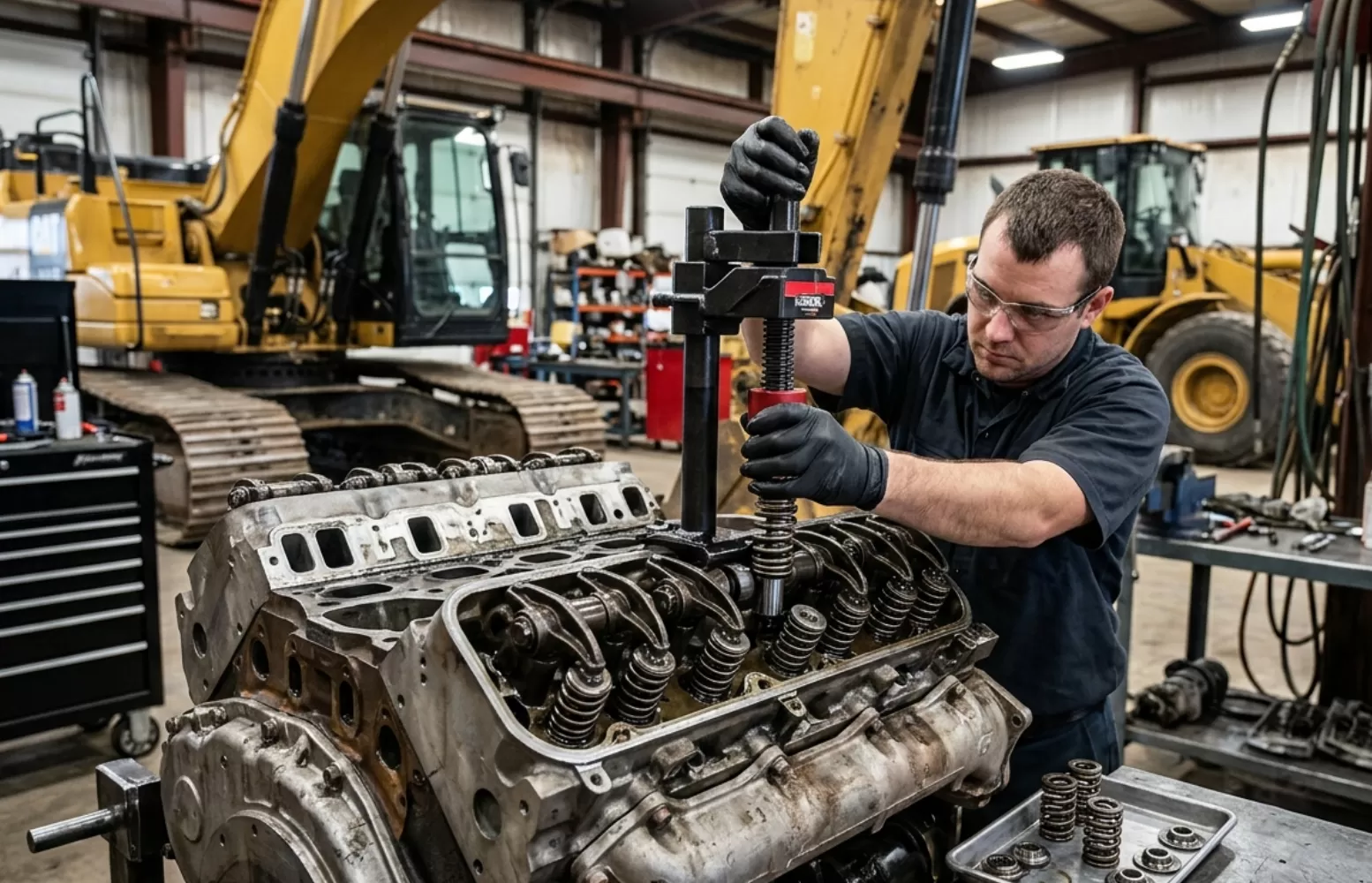
When it comes to keeping equipment running strong most operators focus on filters, fluids, and fuel systems. There's a critical component quietly working inside your diesel engine that often gets overlooked until it fails: the valve spring.
Valve springs are small, but their job is enormous. They control the opening and closing of intake and exhaust valves with precision timing. When they weaken or break, the consequences ripple through the engine.
Understanding valve spring replacement for equipment is essential for anyone serious about avoiding costly downtime.
What Do Valve Springs Do?
Inside every diesel engine, the valvetrain is responsible for controlling airflow in and out of the combustion chamber. Valve springs sit around the valve stem and work against the camshaft lobes to:
- Keep intake and exhaust valves closed at the right moments
- Maintain consistent valve timing under RPM and load conditions
- Prevent valve float, which can cause misfires and power loss
In equipment like excavators, bulldozers, motor graders, and wheel loaders, engines operate under extreme thermal and mechanical stress. That stress takes a toll on even the most robust diesel engine valve springs over time.
Weak Valve Spring Symptoms You Shouldn't Ignore
Catching a failing valve spring early can save you from a major engine rebuild. Here are the common weak valve spring symptoms to watch for:
1. Loss of Engine Power
When a spring loses tension, the valve doesn't close fully or at the correct time. This reduces compression and combustion efficiency, resulting in less pulling or digging power.
2. Excessive Fuel Consumption
Poor valve timing disrupts the air-fuel mixture. If your machine is suddenly burning more fuel for the same output, weak springs could be the culprit.
3. Rough Idling or Misfires
A valve that isn't closing properly allows combustion gases to escape prematurely. This creates inconsistent cylinder performance felt as rough idling or intermittent misfires.
4. Increased Exhaust Smoke
Blue or gray smoke often indicates oil entering the combustion chamber. While sometimes caused by valve seals, it’s frequently linked to valve spring failure allowing valve guides to wear unevenly.
5. Engine Rattling Noises
A broken or collapsed spring creates irregular valve movement that produces metallic ticking or knocking sounds, especially at startup or under load.
6. Failed Compression Test
During diagnostics, if one or more cylinders show low compression, the issue may trace back to a valve that won't seat properly due to a weak or broken spring.
How Should Valve Springs Be Replaced?
Unlike filters or belts, Valve springs don't have a fixed replacement interval in every service manual. Replacement timing depends on:
- Engine hours and load cycles (heavy-duty work like quarrying or demolition accelerates wear)
- Operating temperatures (high heat increases metal fatigue)
- Maintenance history (dirty oil or poor valve adjustments speed up wear)
- Previous repairs (springs should be replaced during cylinder head rebuilds)
As a general rule, many diesel service schedules recommend inspecting valve springs during any top-end overhaul and replacing them if tension falls below manufacturer specifications.
Don’t reuse springs that look “okay.” Loss of tension isn’t always visible.
Choosing the Right Engine Valve Spring Kit
When it’s time to replace, don’t cut corners. Selecting the right engine valve spring kit is critical.
-
Complete Kit vs. Individual Springs
- A quality kit typically includes valve springs, retainers, locks (keepers), and valve stem seals. Replacing all components together reduces the risk of premature failure.
-
Material and Temper Rating
- High-quality springs are made from chrome-silicon or chrome-vanadium steel, designed to withstand intense heat and repeated stress cycles.
-
Correct Specifications
- Always match the spring to your engine model. Free length, compressed load rating, and coil diameter must meet specifications. Even a slightly incorrect spring can disrupt valve timing and cause damage.
-
Sourcing
Buy from trusted suppliers who specialize in heavy equipment parts and can verify specifications. Whether OEM or premium aftermarket, confidence in your source matters.
The Replacement Process: What to Expect
Valve spring replacement is a cylinder head job and typically involves:
- Removing the valve cover and rocker arm assembly
- Removing the cylinder head
- Using a valve spring compressor to remove retainer locks and extract springs
- Inspecting valves, guides, and seats
- Installing new components from the kit
- Reassembling with proper torque specifications
- Adjusting valve clearances after reassembly
This is not a roadside repair. It requires proper tools, a clean workspace, and engine-specific knowledge. If your team isn’t equipped, work with an experienced diesel mechanic.
Preventing Premature Valve Spring Failure
Replacing springs is one thing—keeping them healthy is another. Extend valve spring life with these practices:
- Follow recommended oil change intervals and use the correct viscosity
- Check and adjust valve clearances regularly
- Avoid prolonged high-idle and overloading conditions
- Monitor engine temperature and address cooling issues promptly

About the Author