Worldwide Shipping

Starting Motor Failure: Diagnosis and Replacement for Heavy Machinery

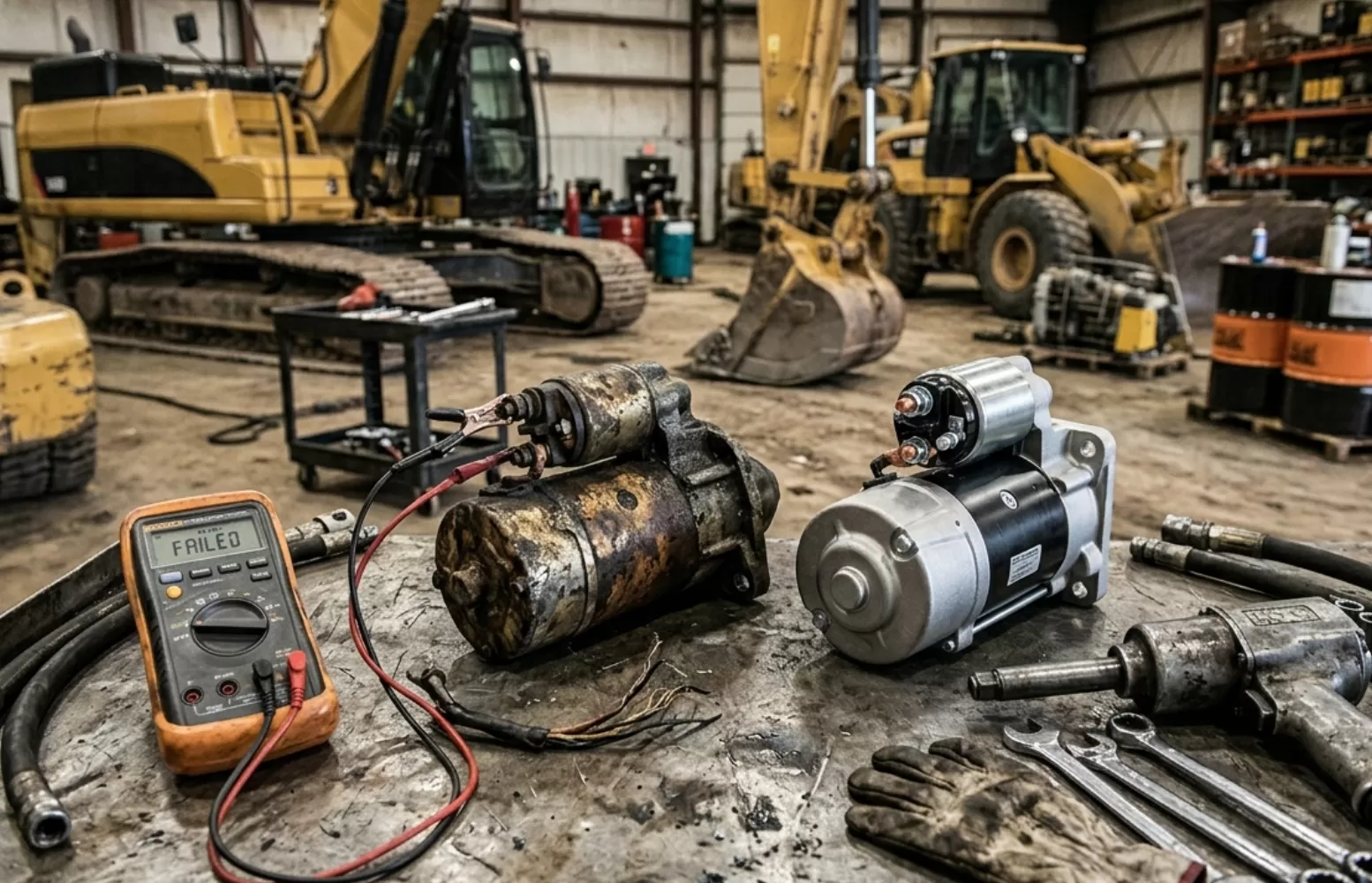
Heavy equipment downtime costs money and few problems bring a machine to a standstill faster than a failed starting motor. Whether you're managing a fleet of excavators, bulldozers, or wheel loaders, understanding starter motor failure symptoms and knowing how to approach starting motor replacement for heavy equipment is essential knowledge for any operator or maintenance manager.
This guide walks you through how to identify a failing starter, diagnose the root cause correctly, and make informed decisions when it's time to replace the component.
What Does the Starting Motor Do?
The starting motor — also called the starter motor — is an electric motor that cranks the engine during startup. It draws power from the battery and engages a pinion gear with the engine's flywheel ring gear, spinning the engine fast enough for combustion to begin.
In heavy equipment, this component endures extreme conditions: high current loads, heat cycles, vibration, and often dusty or wet environments. Over time, these stresses wear the motor down.
Common Starter Motor Failure Symptoms in Heavy Equipment
Catching a problem early can save you from a full breakdown in the field. Here are the most telling starter motor failure symptoms to watch for:
- Engine Cranks Slowly or Sluggishly If your machine turns over but sounds labored or slower than normal, the starter motor may be drawing excessive current due to worn brushes or internal resistance buildup.
- Clicking Sound When You Turn the Key A single loud click or rapid clicking typically points to a solenoid issue or a poor electrical connection — both directly related to the starting circuit.
- Starter Engages but Engine Doesn't Crank This often means the pinion gear or the flywheel ring gear is damaged. The motor spins, but it's not making proper contact.
- Starter Keeps Running After Engine Starts A stuck solenoid or a faulty return spring can cause the starter to stay engaged. This is serious — it can damage both the starter and the flywheel rapidly.
- Grinding Noise During Startup A grinding sound usually indicates the pinion gear is not fully engaging or is already worn. Continued use will worsen ring gear damage.
- Intermittent Starting Problems Sometimes the machine starts fine, sometimes it doesn't. Intermittent issues often point to worn brushes, loose connections, or a failing solenoid — all early warning signs before complete failure.
- Burning Smell or Visible Smoke This is a late-stage symptom. Overheating from a locked motor or prolonged cranking can melt internal windings. Stop use immediately if you notice this.
Excavator Starter Motor: Special Considerations
The excavator starter motor faces unique demands compared to lighter construction equipment. Excavators often operate continuously in harsh environments — deep pits, muddy jobsites, extreme heat — and their engines typically have higher compression ratios that demand more from the starter.
For excavators specifically, pay close attention to:
- Cable condition and terminal corrosion — thick cables that carry high current are especially vulnerable to corrosion at connection points
- Ground connections — a poor ground is one of the most overlooked causes of excavator starting problems
- Battery condition — always test the battery first before condemning the starter; a weak battery mimics many starter failure symptoms
If your excavator is slow to start in cold weather but cranks normally when warm, the issue may be battery-related or internal friction rather than a true starter failure.
Diagnosing Before You Replace
Before ordering a replacement, proper diagnosis saves both time and money. Here's a straightforward field approach:
- Check the battery voltage — should be 12.5V or higher (24V systems for larger machines)
- Inspect all cables and connections — clean terminals and check for fraying or heat damage
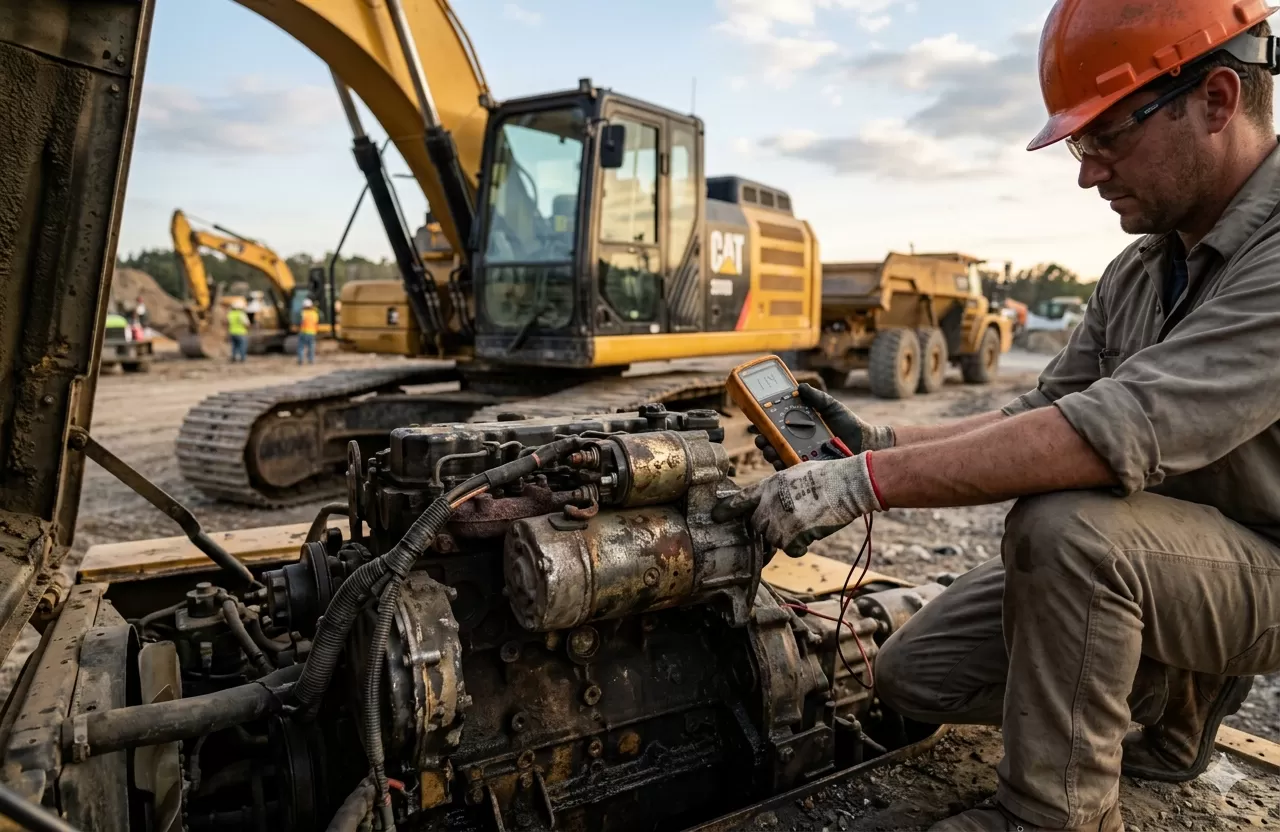
- Test the solenoid — use a multimeter to check for voltage at the solenoid trigger terminal during startup attempts
- Perform a voltage drop test — excessive voltage drop across the starter circuit indicates resistance problems
- Listen to the sound pattern — clicks, grinds, and hums each point to different root causes
Only after confirming the starter motor itself is faulty should you move to replacement.
Starting Motor Replacement for Heavy Equipment: What to Know
When it's time for starting motor replacement on heavy equipment, a few key considerations will determine whether the job goes smoothly:
Match the Specifications Starting motors are rated by voltage (12V or 24V), kilowatt output, and gear tooth count. An incorrect specification means the motor either won't engage properly or will be underpowered for the application.
Choose the Right Part When replacing, choose genuine or high-quality aftermarket parts that meet or exceed OEM specifications. Premium aftermarket starting motors are a cost-effective option that deliver reliable performance — particularly important for machines that run daily.
Don't Skip the Root Cause A new starter won't last if the underlying problem isn't fixed. If the original motor failed due to excessive heat, cable resistance, or a damaged ring gear, address those issues before reinstalling.
Safety First Always disconnect the battery before working on the starter circuit. Starting motors draw enormous current — accidental engagement during installation can cause injury or equipment damage.
How Long Does a Starter Motor Last?
In heavy equipment, a well-maintained starter motor can last anywhere from 3 to 7 years depending on duty cycle, environment, and how well the electrical system is maintained. Machines that sit idle and are started infrequently often experience faster failure from corrosion than those used daily.

About the Author

Related Posts
Signs Your Starting Motor Is Going Bad on Heavy Equipment