Worldwide Shipping

Rolling Strong: How to Maximize the Lifespan of Your Undercarriage Bogie Assembly

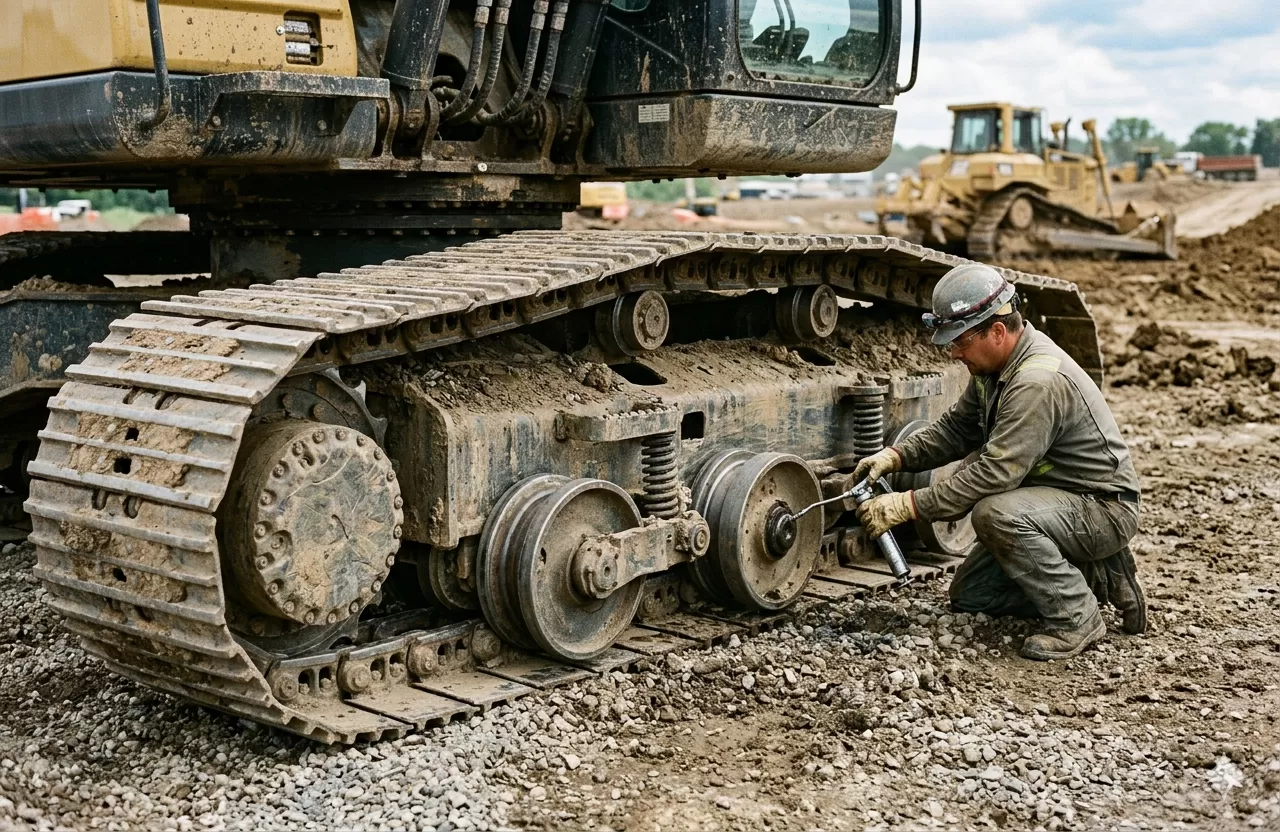
A heavy-duty dozer working a rocky push or a rough grading pass takes thousands of impacts per shift. Most of them never reach the cab, the engine, or the operator’s spine. The component absorbing that punishment — quietly, reliably, and almost always without recognition — is the undercarriage bogie assembly. It’s the suspension system bolted to the bottom of the machine, and when it fails, the consequences ripple straight up through the rollers, the chains, the frame, and eventually the wallet.
Most owners under-prioritize bogie maintenance because it doesn’t shout. There’s no warning light. No gauge. No hour-meter that ticks down to “bogie replacement due.” It just sits down there, equalizing loads across the track and softening every rock the operator drives over, until one day the pads are gone, the pins are sloppy, and the rest of the undercarriage starts wearing twice as fast. By then, the conversation has shifted from “replace a bogie” to “rebuild the undercarriage.”
This guide is written for the contractors, fleet managers, and mechanics running suspended-undercarriage dozers, crawler carriers, and other tracked machines where the bogie assembly carries the load. It covers what’s actually in there, why it costs so much when it fails, the inspection rhythm that catches problems early, and how to make smart decisions when it’s time for replacement parts.
Quick answer: The undercarriage bogie assembly absorbs ground shock and equalizes load across the track so the rest of the undercarriage doesn’t have to. When bogie pads wear out, cartridge pins develop play, or the bogie pivot starts cracking, every other undercarriage component starts wearing faster. Daily inspections and a planned replacement strategy can add 1,500 to 3,000 hours to overall undercarriage life.
What an Undercarriage Bogie Assembly Actually Is
The bogie system is the shock-absorbing layer between the track chain and the rigid frame of the machine. On machines without a suspended undercarriage, the rollers sit directly on a fixed frame and the track has to absorb every impact through the chain. On machines with bogies, the rollers are mounted to pivoting sub-frames — the bogies — that can rock independently as the track passes over uneven ground.
This matters more than it sounds. A dozer pushing over rocky ground without bogies sends shock loads straight into the chain, the rollers, and the frame. The same machine with a functioning bogie system distributes those loads, isolates the impacts, and keeps the track in contact with the ground far more consistently. Better contact means better traction, less slippage, and less wear across every component the bogies are protecting.
A complete bogie assembly typically includes several wear and load-bearing components:
A major bogie is the larger, primary sub-frame that carries the bulk of the machine’s weight on the track. Minor bogies are the smaller pivoting members that ride between or alongside the major bogies, providing additional articulation and impact absorption. Both pivot on cartridge pins — sealed, lubricated pins designed to handle high cyclical loads. Bogie pads sit between the bogie and the track or roller contact surface, taking the brunt of compressive shock. Roller caps and idler caps secure the rollers in the bogie housings. Track guides, inserts, retainers, and covers complete the assembly and keep everything aligned and sealed.
The exact configuration varies by machine and manufacturer. Some heavy-duty crawler dozers use a fully suspended double-bogie design with isolated front idlers. Others use a simpler equalized-beam bogie. Crawler carriers, certain mining equipment, and large pipe-layers use variants of all of the above. The physics is the same: take the hit so the rest of the undercarriage doesn’t have to.
Why a Failing Bogie Assembly Costs So Much
The undercarriage already accounts for roughly 20 percent of a tracked machine’s purchase price and around 50 percent of its lifetime maintenance cost. The bogie assembly is a meaningful share of that — and when it fails, it accelerates wear on everything else.
A full bogie assembly replacement on a heavy crawler dozer typically runs between $3,500 and $12,000 in parts depending on the machine class, with labour adding another $1,500 to $4,000 because the rollers, track, and sometimes the final drive have to come off to access the bogie pivots. Total job: ballpark $5,000 to $16,000.
That’s the planned-replacement cost. The reactive cost is meaningfully worse. A failed bogie that runs too long beats up the rollers, scores the rails on the track chain, and in severe cases cracks the track frame itself. A track-frame repair on a large dozer routinely runs $15,000 to $25,000 in welding and machining before any parts go back on. Add the downtime — usually a week or two of the machine sitting on stands during peak season — and the math gets ugly fast.
That gap between a planned undercarriage bogie replacement and a reactive frame-and-undercarriage rebuild is why experienced fleet managers treat bogies as scheduled-replacement items, not run-to-failure ones.
The Inspection Routine That Catches Bogie Wear Early
Most bogie failures show themselves weeks or months before the catastrophic event. The trick is knowing where to look. The check below takes under ten minutes once an operator gets the rhythm of it.
- Bogie pad condition. Walk the machine and inspect each bogie pad for cracking, chunking, or excessive compression set. A pad that has lost more than about 30% of its original thickness is at the end of its useful life. A cracked pad is a stop-work finding — it will damage the bogie housing within hours.
- Cartridge pin play. Bar each bogie at the pivot point with a long pry bar and look for visible movement at the pin. Healthy pins show no detectable play. Anything you can see with the naked eye means the bushings are worn and the pin should be inspected during the next service window.
- Oil weeping at pivots. Cartridge pins are sealed and lubricated. A weeping seal is the cheapest possible early warning — catch it now and you replace a seal, ignore it and you replace the pin and bushing.
- Track guide and retainer hardware. Look for missing or loose bolts on the track guides, retainers, and pad backing plates. Loose hardware vibrates itself further loose over a shift and lets components shift out of alignment.
- Roller cap integrity. The roller caps that secure rollers within the bogie housings are a frequent failure point. Check for cracks, missing bolts, or signs of impact damage.
- Frame cracking near the bogie mounts. This is the one most operators miss. Inspect the track frame where the bogie pivots attach for hairline cracks radiating from the mounting holes. Stress cracks here are an urgent finding and need professional evaluation before the next shift.
- Uneven wear across paired bogies. If one major bogie is showing significantly more wear than its counterpart on the other track, something upstream is causing it — a binding pivot, a misaligned track, or an operating habit. Note it and investigate at the next service.
The check works best at end of shift, after the operator has parked on level ground and the machine has had a chance to settle.
Six Habits That Extend Bogie Assembly Life
The bogie system, like the rest of the undercarriage, mostly wears at the speed of the habits around it. Six practices separate machines that get 8,000 hours out of a bogie set from machines that need a rebuild at 4,000.
1. Clean the Undercarriage Every Shift
Packed mud, rocks, and frozen debris sit on top of the bogies and find their way into pivot points and pad surfaces. Every shift the gunk stays on the machine, it grinds away at sealed components, holds moisture against steel, and adds weight that loads the bogie pivots harder than design. A pressure wash or shovel-out at the end of every day is the single most impactful task an operator can do for the bogie system. Non-negotiable in cold climates, where frozen debris turns into an aggressive wedge.
2. Keep Track Tension on Spec
A track that’s too tight pulls the bogies upward and loads the cartridge pins continuously. A track that’s too loose lets the bogies hammer up and down with every pass, accelerating pad wear and pin fatigue. Check tension against the OEM spec, in the conditions the machine will be working in. Tension that’s right on a packed yard is often wrong by the time the machine hits soft ground.
3. Don’t Spin the Tracks
Track spin is a bogie killer. Every time the operator powers through resistance and lets a track break loose, the bogies absorb a sudden unloading and reloading cycle that’s harder on pivots and pads than any single impact. Coach operators to back off when traction is lost rather than push through it. The fuel savings alone usually justify the habit.
4. Approach Slopes Straight, Not Sideways
A machine sitting sideways on a slope puts all of its weight on the downhill bogies. Hours of that imbalance wears the downhill side dramatically faster than the uphill side and warps the wear pattern across the whole undercarriage. Whenever the job geometry allows, approach slopes straight up or down. When working sideways is unavoidable, vary the direction across the shift.
5. Grease Pivots on Schedule (When Designed for It)
Some bogie designs have grease points at the pivots; some are sealed-for-life cartridge designs. Know which is on your machine. For greased designs, follow the OEM interval religiously — usually every 50 to 100 hours — and use the manufacturer-specified grade. The wrong grease in a high-load pivot is almost as bad as no grease at all.
6. Coach Operators on Reverse Travel
Long stretches of high-speed reverse travel are unusually hard on bogie assemblies. The geometry of the suspended undercarriage is optimized for forward push, and excessive reverse work loads the pivots and pads in directions they weren’t designed for. Use reverse to reposition, not to travel. When the work allows, walk the machine forward to the next position rather than backing across a long stretch.
Inspection and Service Intervals at a Glance
The intervals below are a starting framework for track bogie heavy equipment owners — adjust based on operating environment and OEM guidance for the specific machine.
|
Interval |
What to Check or Service |
Notes |
|
Every shift |
Bogie pads, weeps, loose hardware, debris |
5 to 10 minutes; operator-led |
|
Every 50–100 hours |
Grease pivots on greased designs; check pad wear |
Use OEM-specified lubricant only |
|
Every 250 hours |
Measure pad thickness; inspect cartridge pin play with a pry bar |
Pull out of service for proper measurement |
|
Every 500 hours |
Inspect bogie mounts and frame for stress cracks; check roller caps |
A flashlight and a clean rag tell most of the story |
|
Every 1,000 hours |
Full undercarriage wear measurement including bogie components |
Compare against OEM wear limits |
|
Every 2,000–4,000 hours |
Plan major bogie component replacement based on measured wear |
Coordinate with chain, sprocket, and roller replacement |
Severe service — abrasive volcanic soil, mining, coastal salt environments — can effectively halve every one of these intervals. A machine working in clean topsoil and one working in granite quarry tailings cannot be on the same maintenance schedule.
Reading the Signs Before Catastrophic Failure
Experienced mechanics learn to read a bogie assembly the way a chiropractor reads a back. The patterns tell the story before any single component fails.
Excessive rocking or “clunking” through the cab. When pivots wear, the operator starts feeling individual rocks and bumps that used to be invisible. If the cab is suddenly transmitting impacts it didn’t last month, the bogies are losing their ability to absorb. Inspect pivots and pads.
Track lifting visibly off the bogies on uneven ground. Healthy bogies keep the track in firm contact with the ground across the full length of the machine. When pads compress or pivots seize, the track starts skipping contact, especially over crowns or dips. This shows up as visible gaps between the track and the bottom rollers.
Uneven wear across paired major bogies. One side wearing significantly faster than the other points to a binding pivot, a misaligned mount, or — more often — a recurring operating habit like sidehill work. The bogie isn’t the problem here; it’s the symptom. Find the root cause.
Cracked or chunking bogie pads. Pads are designed to compress, not crack. A cracked pad means the loads exceeded the design envelope — usually because the machine is being run on harder material than the pad was specified for, or because the pad is past its service life and has hardened with age. Replace immediately.
Oil residue around the cartridge pin caps. Sealed cartridge pins shouldn’t leak. Any oil weep around a pin cap means the seal is failing and contaminants are starting to reach the bushing. Catch it here and the fix is a seal kit. Catch it three months later and it’s the whole pin.
Hairline cracks at bogie mount locations on the track frame. This is the diagnostic that separates good mechanics from great ones. Cracks radiating from the bogie pivot mounting holes mean the frame itself is fatiguing. Stop operation, mark the cracks, and get a qualified welder or technician to evaluate before the next shift.
Common mistake: Replacing only the worst-looking bogie and leaving the rest. The bogie system works as a coordinated set. A new major bogie paired with worn minor bogies, or a new pad set on tired cartridge pins, transfers loads unevenly and accelerates wear on both. When the wear data supports it, plan the replacement as a coordinated job — not a series of one-off fixes spread across six service intervals.
When to Repair vs Replace
The bogie assembly is one of the few undercarriage systems where a thoughtful repair often makes more sense than a complete replacement. The decision points below are worth knowing.
|
Condition |
Action |
Notes |
|
Bogie pad worn past 30% or cracked |
Replace pads only |
Don’t replace the bogie if pivots are still sound |
|
Cartridge pin seal weeping, no play |
Replace seal kit |
Cheapest fix; do not delay |
|
Cartridge pin play detectable by hand |
Replace pin and bushing |
Often a same-day shop job |
|
Major bogie housing cracked |
Replace the bogie |
Welding repair is rarely a durable fix |
|
Multiple wear points exceeded simultaneously |
Replace complete bogie assembly |
Coordinated replacement is cheaper than serial repairs |
|
Frame cracks at bogie mounts |
Stop, evaluate, repair frame first |
Replacing bogies on a cracked frame is throwing parts away |
|
Bogie age past OEM service life |
Plan replacement at next major service |
Proactive is cheaper than reactive |
When replacing components, choose genuine or high-quality aftermarket parts that meet or exceed OEM specifications. Premium aftermarket bogie components from established suppliers are engineered to the same load ratings, hardness, and pad compound specifications as factory parts, often at a meaningful saving — particularly on older machines where OEM lead times stretch into weeks.
Replacement Parts: What to Look For
Not every aftermarket bogie part is built the same. When sourcing replacement components for the bogie assembly undercarriage system, three things matter more than price alone.
Load and material specifications. Major bogies carry the bulk of the machine’s weight under cyclical impact loading. Reputable suppliers publish their casting or forging grade, heat treatment profile, and rated load capacity. Cartridge pins should have published hardness, induction depth, and bushing material data. If a supplier won’t share that information, that’s the answer to the question.
Fitment data down to serial number. Bogie assemblies are highly machine-specific. Pivot bore dimensions, mounting bolt patterns, pad geometry, and overall assembly height vary not only by model but often by serial number range within a model. A “fits multiple dozer applications” listing is a warning sign. Look for parts cross-referenced to your exact make, model, and serial number range — ideally with an OEM part number cross-reference table on the listing.
Warranty and traceability. A clear warranty term — typically 6 to 12 months or a defined hour limit — and documented batch traceability are the signs of a supplier who stands behind the product. High-quality aftermarket components that meet or exceed OEM expectations should come with the paperwork to prove it: material certificates, hardness reports, and a returns process that doesn’t require a fight.
A consistent supplier relationship for track bogie heavy equipment parts also pays off in ways that don’t appear on the invoice. Cross-referencing across mixed fleets, predictable stock levels on common wear items, and shipping speed on the parts that always seem to fail at the wrong moment all reduce downtime more than any one-time discount.
Cold-Weather, Abrasive, and Sidehill Conditions
Three operating environments deserve specific attention because they put unusual demands on the bogie system.
Cold-weather operation. Frozen mud, ice, and packed debris turn into a wedge between the bogie components and the surrounding undercarriage. The result is constant shock loading on cold-soaked pads that have temporarily lost some of their compliance, plus the risk of breaking seals on first movement in the morning. Clean before parking — every shift, no exceptions — and let the machine warm up on its tracks before applying full push.
Abrasive soil and rock applications. Granite, basalt, sand, and certain volcanic soils are far harder on bogie pads than typical construction work. Pads can wear in a fraction of their expected life in mining or quarry service. The fix is twofold: tighten the inspection rhythm to every 100 hours instead of every 250, and consider heavier-duty pad compounds and harder-grade pins if the supplier offers application-specific options.
Sidehill and slope work. Operating consistently with one side of the machine bearing more load skews wear across the bogies dramatically. The downhill bogies wear two to three times faster than the uphill side. When the job allows, vary the direction of travel and the side of the slope. When it doesn’t, build the uneven wear into the replacement plan — expect the downhill side to need attention first, and inspect it more frequently.
Building a Bogie Maintenance Log
Most fleets keep some form of undercarriage log. Few keep one that’s actually useful when a bogie problem develops. A useful crawler bogie assembly log captures three things on each inspection: the operating hours at inspection, measured pad thickness and visible pin condition on each bogie position, and any corrective action taken.
Over time, this turns into a wear curve. You see the moment one position starts wearing faster than its counterpart. You see the slow climb in average pad wear rate that signals the job mix has shifted to harder material. You catch the trend that turns into a stress crack three services later. That single change — from reactive replacement to data-informed scheduling — typically saves a fleet 15 to 25 percent on undercarriage spending, because nothing gets thrown out early and nothing runs long enough to damage what’s around it.
Bringing It Together
The undercarriage bogie assembly is one of the most overlooked, hardest-working systems on a tracked machine. The maintenance isn’t difficult. The inspections aren’t time-consuming. What’s required is consistency — the same checks, the same cleaning, the same coaching, every shift. Fleets that build that consistency see their bogies last longer, their rollers and chains last longer because of it, and their major repair bills become predictable instead of catastrophic.
The rule of thumb worth taking away: the bogie system is a coordinated set, not a collection of independent parts. Replace it that way, inspect it that way, and operate the machine knowing every habit in the cab is either extending its life or shortening it.
When the time comes for replacement, choose components — genuine or high-quality aftermarket — that meet or exceed OEM specifications, source them from a supplier who can document fitment, material specs, and load ratings, and plan the work as a coordinated replacement rather than a string of one-off repairs. That’s how you get the full working life out of a bogie assembly, and out of the undercarriage it’s protecting.

About the Author

Related Posts
A Complete Guide to Extending the Life of Your Undercarriage System